
Application of Kentucky’s death penalty shows racial biases, new report says
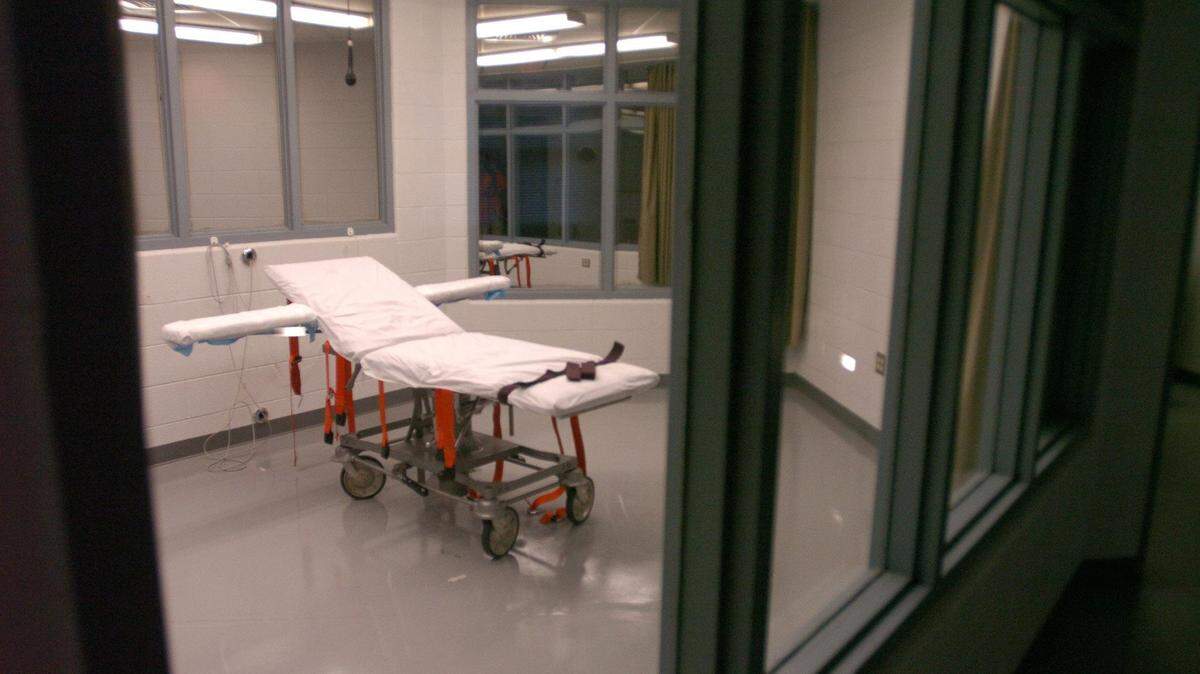
The death penalty in Kentucky has been used sparingly in the last 30-plus years, but its use shows racial biases, according to a new report from local researchers and other experts.
In cases eligible for the death penalty, those with white victims have been far more likely to end in the convict being sentenced to death, according to a report from Professor Frank Baumgartner at UNC Chapel-Hill and the Kentucky Coalition to Abolish the Death Penalty.
Kentucky has handed down 82 death sentences since 1975. In those instances, cases with white victims were five times more likely to result in a death sentence than cases with Black victims, according to the report. Black men have been 20 times more likely to receive a death sentence when the victim is a white female, according to the report.
Black male victims account for nearly 30 percent of all homicide victims in Kentucky, but fewer than 8 percent of death sentence cases in Kentucky involved a Black victim, according to the report.
“It’s clear that racial disparities factor in in a way that is, of course, detrimental to Black and brown folks,” said Russell Allen, the co-director of organizing at the Kentucky Coalition to Abolish the Death Penalty.
Death sentences are rare in Kentucky. Less than 1 percent of all homicide cases have resulted in a death sentence and less than one-half a percent of all homicide cases have resulted in an actual execution, according to the report.
More than 70 percent of Kentucky’s 120 counties have never handed down a death sentence, according to the report.
Kentucky hasn’t executed someone since 2008 and has only carried out three executions in total since 1976, according to the report. Only Jefferson and Fayette counties have issued 10 or more death sentences since 1972.
“The only two places that have double digits are places with large Black populations,” Allen said. He also said the sparse use of the death penalty makes many in Kentucky feel as if it’s not a major issue.
Allen said the Kentucky Coalition to Abolish the Death Penalty teamed up with Baumgartner to publish the report and “prove to folks that the Kentucky death penalty is something that needs to end.”
Utilizing capital punishment hasn’t provided timely ends to court cases in the commonwealth. There are currently 26 death row inmates in Kentucky, according to the Department of Corrections. Twenty-five of those 26 have been on death row for more than a decade. Twenty-one of them were sentenced in 2000 or earlier, according to court records.
The average age of death row inmates in Kentucky is greater than 60 years old, according to the study.
“If the death penalty is supposed to be this thing that’s utilized to provide swift justice to families ... it’s not being used that way and folks haven’t intended to use it that way in a long time,” Allen said.
The Department of Public Advocacy in Kentucky has argued that the death penalty is a high-cost punishment with an “extraordinary error rate.”
Sixty-seven percent of all people sentenced to death in Kentucky between 1976 and 2011 had their sentence vacated, according to the Department of Public Advocacy.
Kentucky uses lethal injections for all its death row inmates, according to state law. Anyone sentenced to death prior to March 31, 1998, is permitted to choose between injection and electrocution, according to state law.
Baumgartner wrote in his report that his findings lead him to ask: “what is the point of retaining a costly system that is racially biased, rarely used, and so capriciously applied?”
“It exhibits extreme racial disparities,” Baumgartner wrote in his report, “with killers of white victims vastly more likely to receive a death sentence than those with victims of other races; it is rarely used; it is geographically arbitrary; it has little relation with homicides either across time or across space; it most commonly leads to decades on death row before the sentence is later overturned on appeal; and it is falling out of use since no sentences have been handed down since 2014, even though over 1,000 homicides have occurred in that period.”